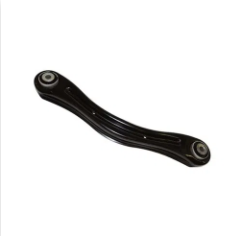
Die forging is divided into open die forging and closed die forging
Definition of die forging: The method of placing the heated blank in the die fixed on the die forging equipment for forging is called die forging. Die forging is the main process of forging with special forging die to obtain the required shape and size.
The characteristic of die forging is that under the action of the forging press, the blank is forced to plastic flow forming in the forging die cavity, so as to obtain a forging with better quality than the free forging.
Die forging features:
advantage:
High productivity. The forging has complex shape and high dimensional accuracy. Small machining allowance and high material utilization rate. However, the streamline distribution is more reasonable, and the service life of the parts is improved. The production process is easy to operate with low labor intensity. After mass production, the cost is low.
Disadvantages:
Large investment in equipment. Long production preparation cycle. The forging die has high cost and low service life. Process flexibility is not as good as free forging.
Open die forging is a forging method in which the flow of deformed metal is not completely limited by the die cavity. During open die forging, excess metal flows in the direction perpendicular to the force to form burrs.
Open die forging has four stages: 1. Free deformation or pier roughening stage. 2. Forming burr stage. 3. Filling groove stage. 4. Foot forging or leaning. The loss of flash metal in open die forging is large, and the flash usually accounts for 10-50% of the forging quality.
Closed die forging is also called flash free die forging.
Advantages: 1. Reduce flash loss 2. Save trimming equipment. 3. It is conducive to filling the cavity with metal. 4. The metal is in an obvious three-way pressure state during closed die forging, which is conducive to the forming of low plasticity materials.
Necessary conditions for closed die forging: 1. The blank volume is accurate. 2. The blank shape is reasonable and can be accurately positioned in the mold chamber.3. The striking energy or die pressure can be controlled accurately. 4. There is a simple take out measure or jacking mechanism.
Due to these necessary conditions, the use of closed die forging is limited. The scope of application is axisymmetric or nearly symmetric deformation.